
The French door: a leaf that overlaps the frame
In France the door leaf is rabbeted and overlaps the frame, like the sash of a French window. In the US the leaf is flush. It changes the look, the hinges and the way the door closes.
Porte à recouvrement
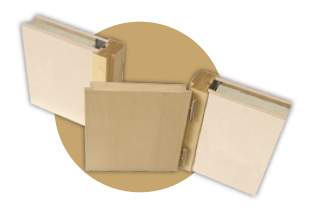
Look at a traditional French door and you will see the leaf standing slightly proud of the frame, with a small step all around its edge. That step is a rabbet (feuillure): the edge of the leaf is cut so that the face of the door overlaps the frame by about 1/2″ (12 mm) when closed. The gap between leaf and frame disappears behind the overlap. This is exactly the detail of a French window, where the sash overlaps the frame, and it is what makes a French door look French.
American interior doors are flush: the leaf has square edges and sits inside the frame, in the same plane, hung on butt hinges, with the gap visible all around. Both are good doors. They are not the same door.
- Rabbeted leaf, overlapping the frame by about 1/2″
- The gap is hidden behind the overlap: no light, less sound, no draft
- Fine adjustment of the leaf without the gap ever showing
- The leaf closes against a continuous stop with an acoustic seal
- The shadow line of the overlap gives the door its relief
The hinges that come with it
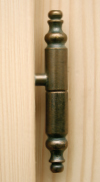
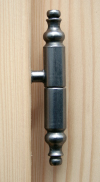
An overlapping leaf cannot hang on American butt hinges. It is hung on fiches: hinges with a visible knuckle and a decorative tip, screwed into the edge of the leaf and the frame, three or four per door, adjustable in three directions once the door is hung. The classic French model is the fiche à turlupet, in polished iron, aged brass or polished brass, with the little turned finial that you see on every door of a French château. Modern straight or cylindrical versions exist for contemporary rooms. For a square-edge, flush door, we use paumelles or invisible hinges instead.
- Fiche à turlupet: polished iron, aged brass, polished brass
- Modern fiche: polished brass, nickel, zinc
- Exacta 3D: adjustable, with cover caps
- 3 or 4 hinges per door, according to size and weight
Overlapping or flush: how to choose
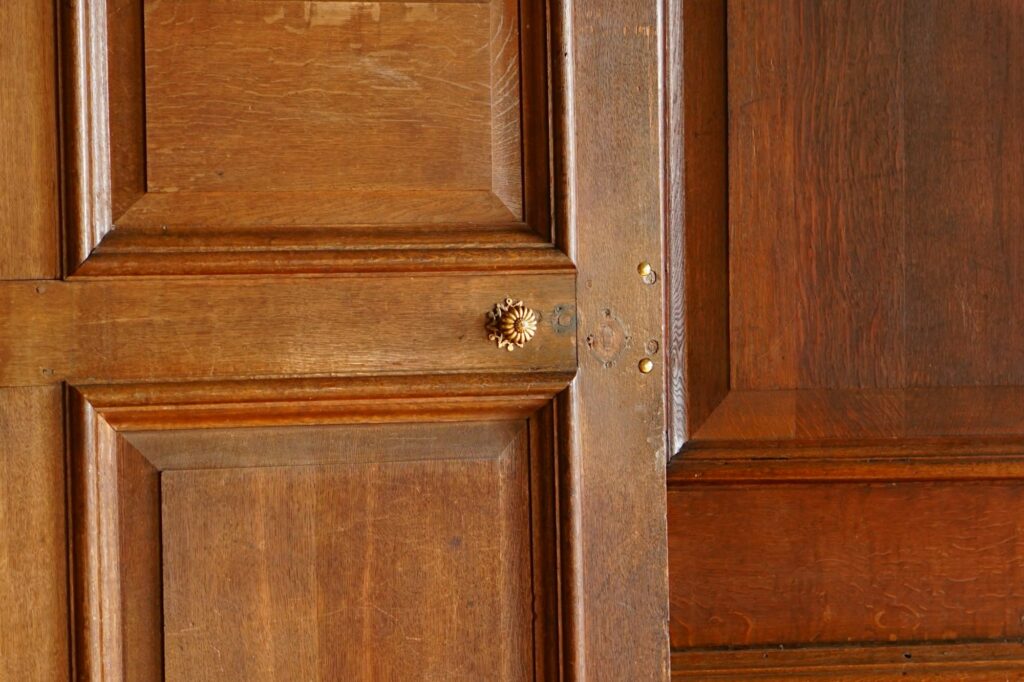
Overlapping leaf (French)
- French château, Haussmann, country house, traditional interiors
- Heritage collection, Grand Cadre moldings, divided lites
- Hides the gap, better seal, forgiving adjustment
- Visible fiches hinges, part of the look
Flush leaf (square edge)
- Contemporary interiors, loft, minimal
- Modern, Flush and Atelier collections
- Door and frame in one plane, tight tolerances
- Butt hinges or invisible hinges
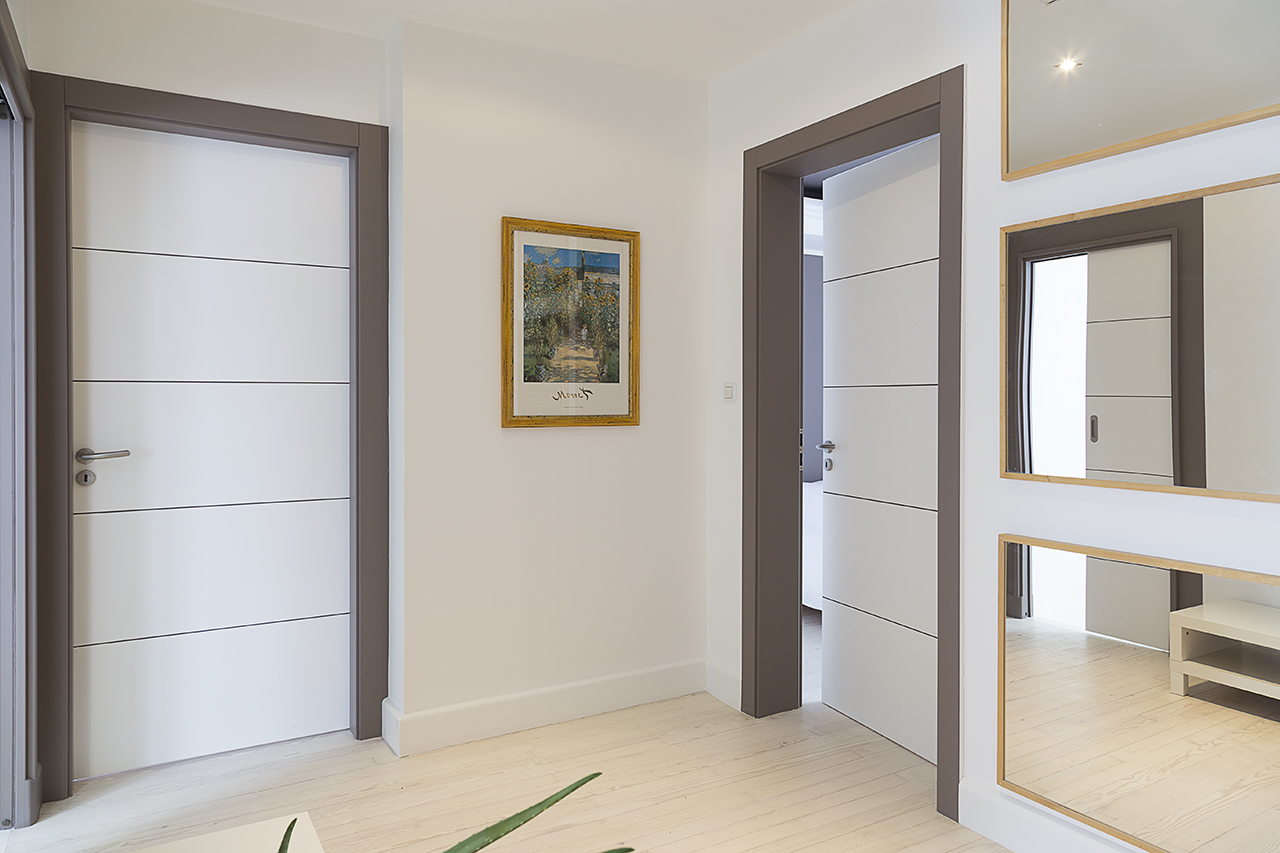
Both are made to size
- Every model can be ordered either way
- Same 1-9/16″ (39 mm) leaf, same joinery
- Tell us the look you want; we specify the edge and the hinges
- Transoms, double doors, oversize on request
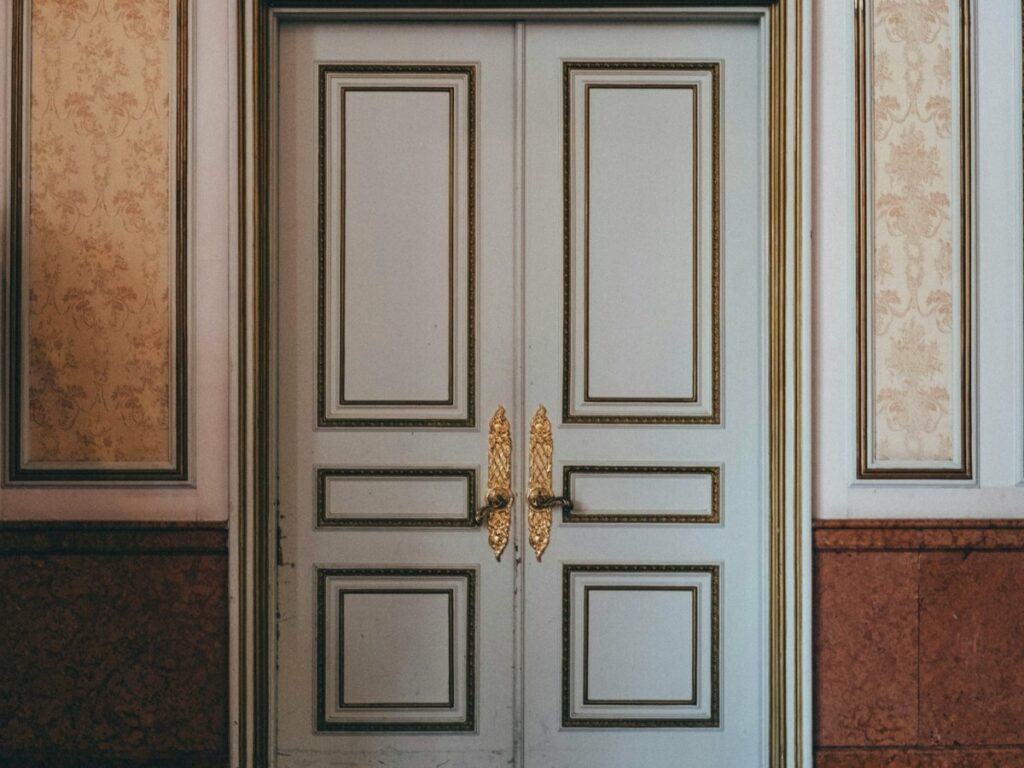
The door of a French house
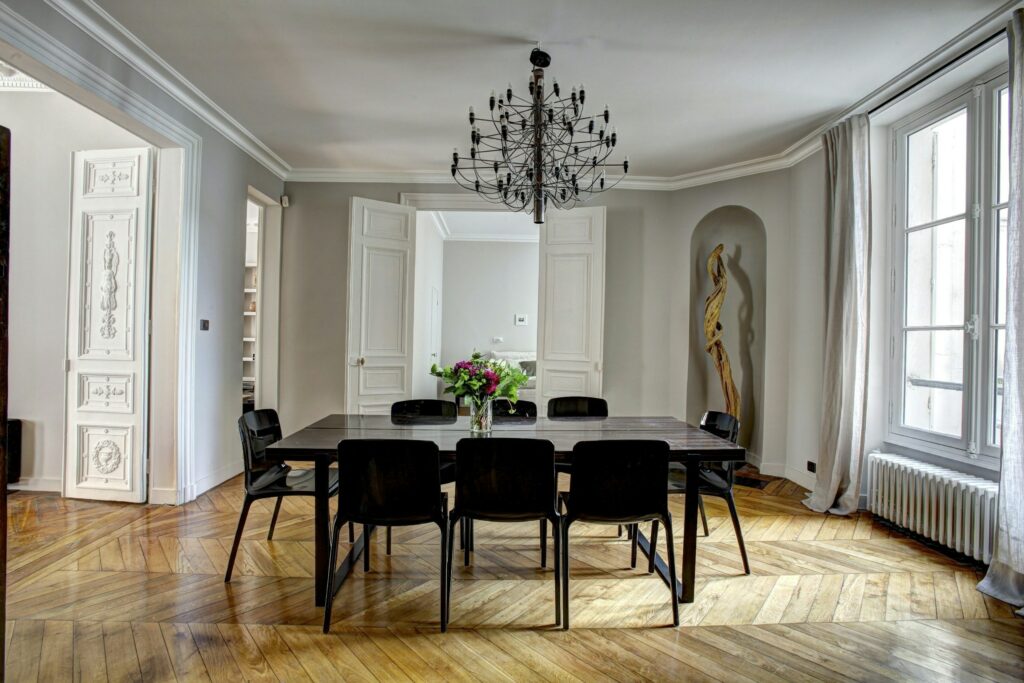
Architects who design French-style homes in the US ask us for this detail by name, because it is the one thing a standard American door cannot imitate. Put a rabbeted Heritage door with turlupet hinges, a Grand Cadre molding and a wrap-around jamb in a hallway, and the house reads French before anyone notices why. Pair it with our French windows and the detail runs through the whole house.
Go further
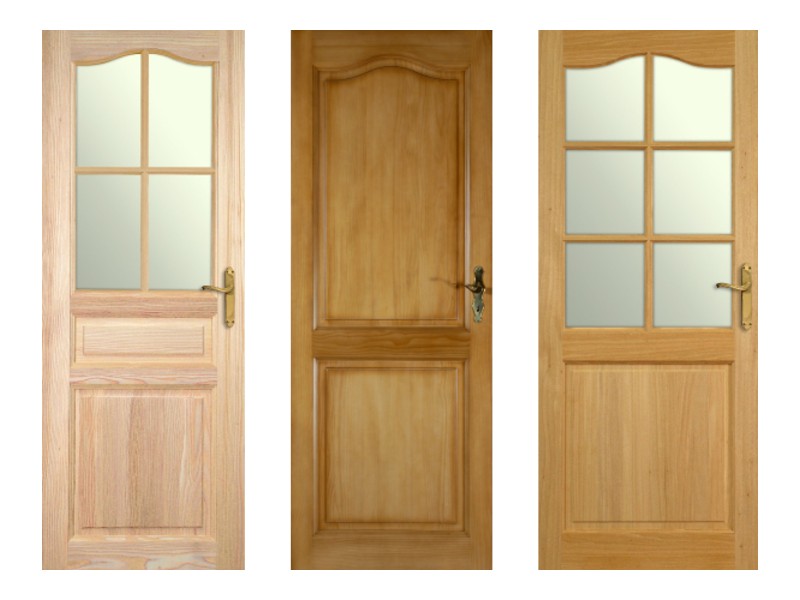
Heritage collection
36 raised-panel and divided-lite models, the natural home of the overlapping leaf.
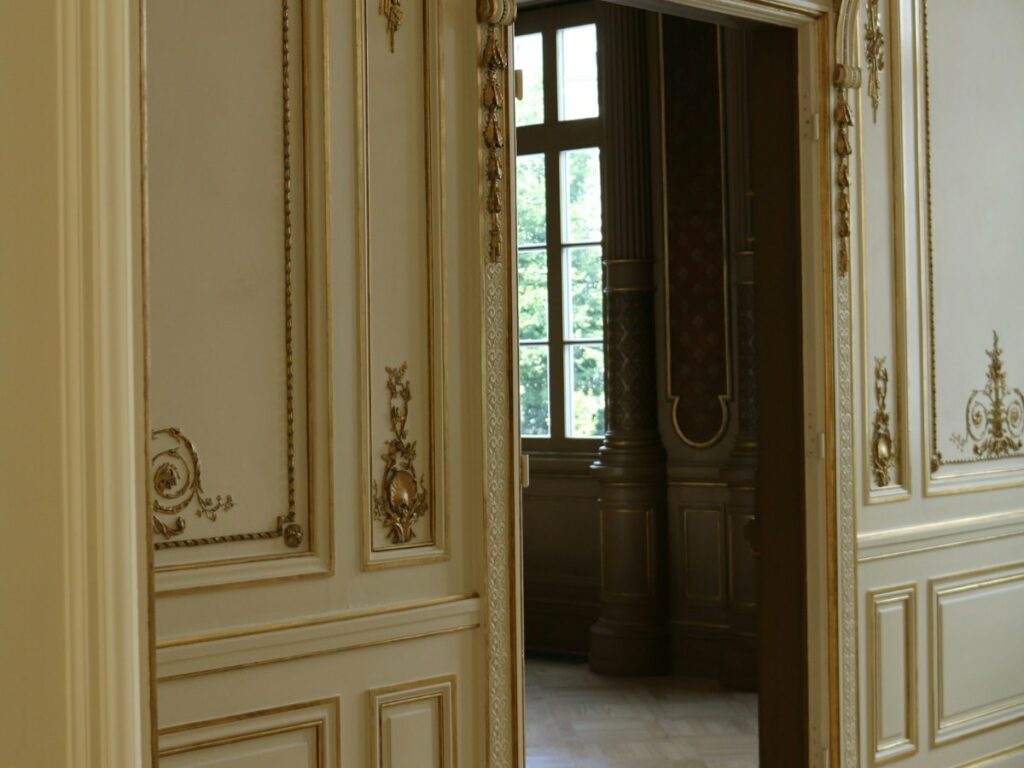
Three installation methods
Tunnel, applique and end-of-construction, explained.
Frames & installation
Standard jamb, surface-mounted, wrap-around, invisible.
Send us your door schedule
A few photos of the house, the number of doors, the sizes if you have them. We reply with a quote, not a brochure.
 French